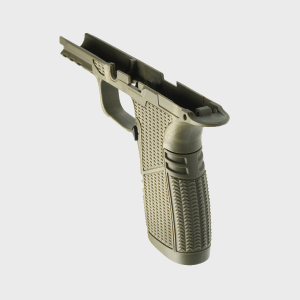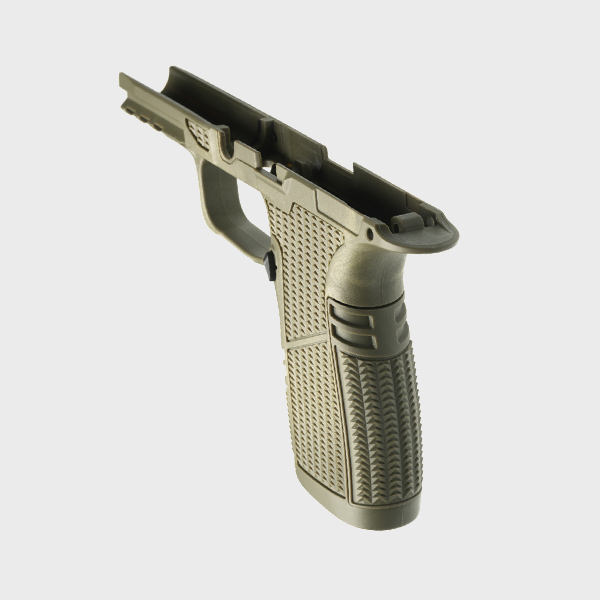
The SIG Sauer P365 platform is built around modularity, giving owners considerably more freedom than a traditional fixed-frame pistol. At the center of that flexibility is the removable Fire Control Unit, which allows the same core P365 platform to be configured around different grip modules and, in more specialized builds, a complete chassis system such as the Tyrant Weapon System 365.
That creates an important buying decision. Should you keep the P365 in a conventional pistol configuration with a standard or aftermarket grip module, or move the FCU into a TWS365 chassis? The answer depends less on which option is universally “better” and more on what you expect the finished platform to do. A conventional grip-module build preserves the familiar size, handling, and carry characteristics of a P365, while the TWS365 transforms the platform into a more specialized PDW-style system with a folding brace, accessory interfaces, and onboard spare-magazine storage.
Start With What Changes Between the Two Setups
A standard P365 grip module and the TWS365 both provide a home for the P365 FCU, but they create very different finished configurations.
Standard Grip Module Setup
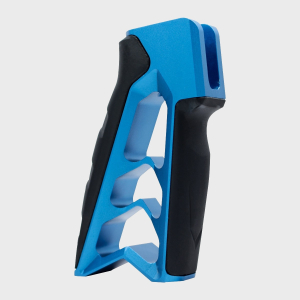
With a conventional grip module, the P365 remains fundamentally a handgun. Owners can choose among compact, XL-style, XMacro-style, and aftermarket grip configurations while retaining the familiar pistol format.
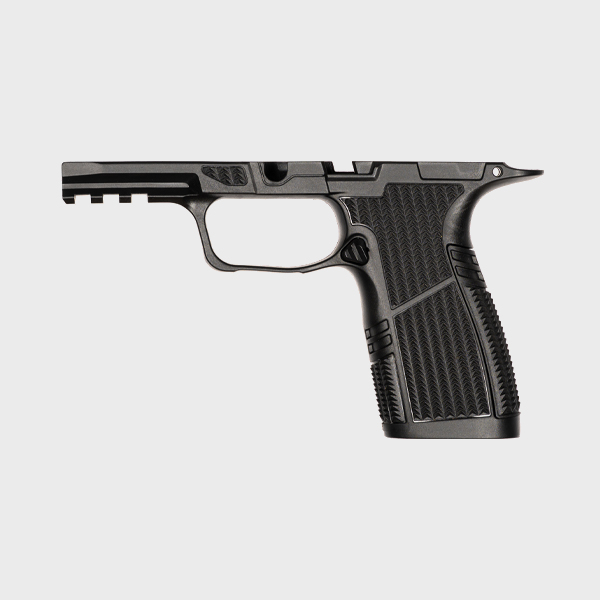
This route allows the shooter to change grip length, texture, backstrap configuration, magazine capacity, rail space, and other ergonomic characteristics without fundamentally changing how the P365 is carried or handled.
TWS365 Chassis Setup
The TWS365 takes the P365 FCU and upper assembly into a substantially different chassis architecture. Instead of functioning simply as a replacement grip, the system incorporates a larger chassis, folding brace, forward magazine holder, accessory mounting interfaces, and an open upper design.
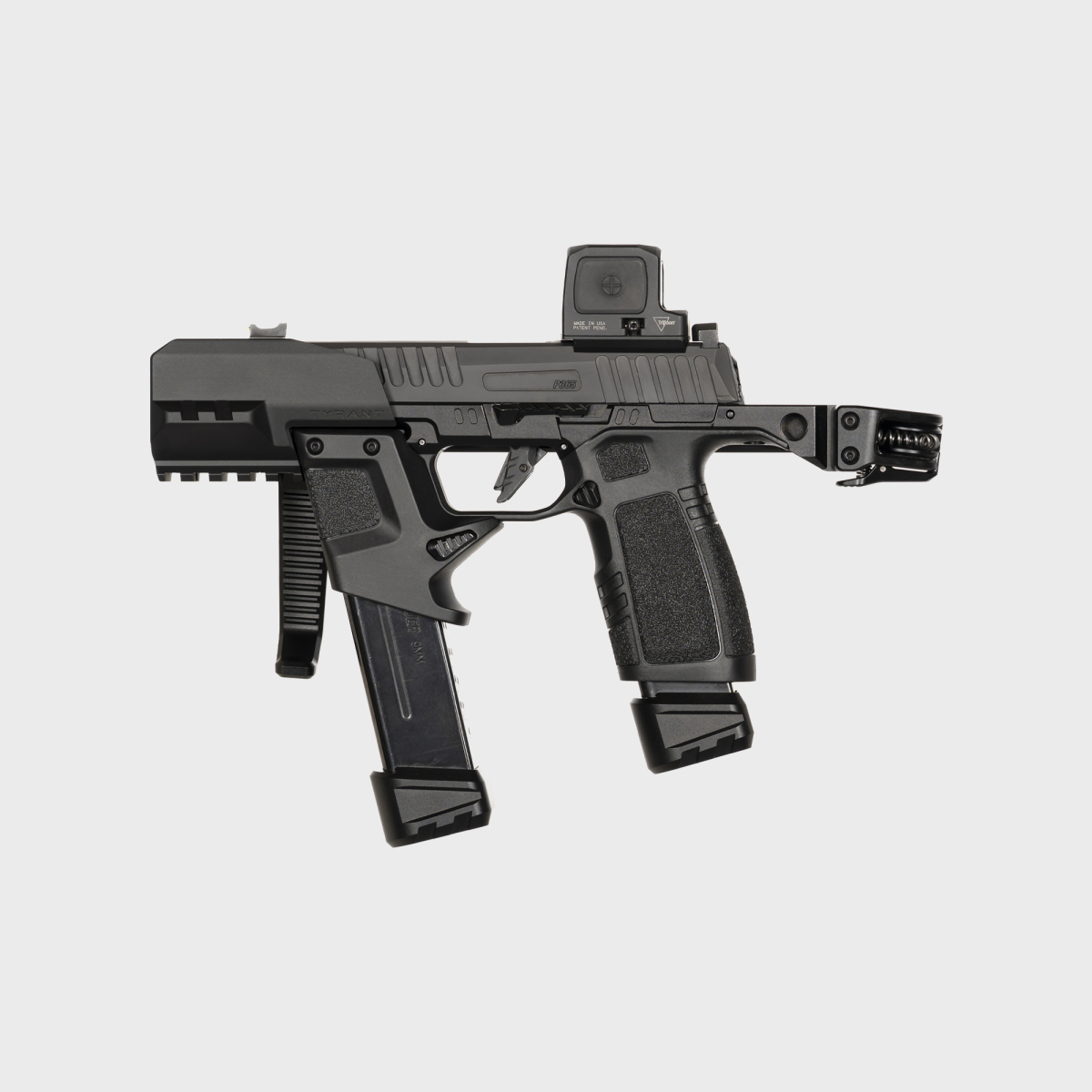
For buyers, this distinction is essential. The TWS365 is not simply a more aggressive-looking P365 grip module. It changes the overall purpose and configuration of the platform.
Why the P365 FCU Makes Both Options Possible
The removable P365 Fire Control Unit is what allows owners to consider such different configurations without starting with an entirely separate platform.
One Core Platform, Different Configurations
The FCU can be transferred between compatible configurations, allowing a P365 owner to change the surrounding grip or chassis according to the intended setup.
Standard Modules Keep Things Familiar
Moving between conventional P365 grip modules primarily changes ergonomics, capacity, and accessory compatibility while retaining the general handgun layout.
The TWS365 Changes the Overall Architecture
Installing the FCU into the TWS365 creates a more substantial change because the chassis introduces additional structural and accessory features around the P365 operating system.
Standard Grip Modules Offer More Traditional P365 Flexibility
For many owners, the greatest advantage of staying with a standard grip-module setup is the ability to refine the P365 without giving up its familiar handgun characteristics.
Choose the Grip Length You Prefer
A compact grip can prioritize concealability, while a longer XMacro-style module can provide a larger firing surface and support higher-capacity magazines. Aftermarket options can create additional combinations between these extremes.
Change the Ergonomics
Grip modules can alter undercut geometry, beavertail shape, texture, trigger reach, and backstrap configuration. This gives owners significant control over how the P365 feels without changing the fundamental layout of the pistol.
Preserve Conventional Carry Options
A traditional grip-module configuration generally keeps the P365 within the familiar ecosystem of pistol holsters and carry equipment, although exact holster compatibility still depends on the grip module, slide, optic, light, and other installed accessories.
The TWS365 Is a Much Bigger Transformation
The TWS365 is intended for buyers looking for more than an ergonomic frame change. Its chassis architecture adds capabilities that cannot be achieved simply by changing a standard grip module.
Hybrid Chassis Construction
The TWS365 combines an aluminum receiver structure with polymer grip components. This creates a more substantial chassis around the P365 FCU while maintaining a modular design.
Folding Brace Configuration
A spring-loaded side-folding brace changes how the complete system can be configured and stored. This is one of the most obvious differences from a standard grip-module P365.
Forward Magazine Storage
The TWS365 incorporates a removable forward magazine holder. This allows the platform to retain a second compatible magazine directly on the chassis rather than requiring the spare magazine to be stored separately.
Accessory Mounting Is Another Major Difference
A standard P365 grip module provides accessory capability according to its particular dust cover and rail configuration. The TWS365 expands the concept by building accessory interfaces into the larger chassis.
Standard P365 Rail Options
Rail capability varies considerably throughout the P365 family. Some compact configurations offer relatively limited mounting space, while full-length XMacro-style modules can provide substantially more room for compatible lights and other accessories.
TWS365 Accessory Interfaces
The TWS365 incorporates Picatinny mounting interfaces into the chassis, creating additional opportunities to configure compatible accessories around the system.
Think About the Finished Build
If your P365 only needs a compact weapon light, a conventional grip module may already provide everything required. If the goal is a more extensively configured PDW-style system, the additional chassis architecture becomes much more relevant.
Optic Setup Remains an Important Consideration
Moving to a chassis does not eliminate the need to consider how the existing P365 upper is configured.
Standard Grip Module Builds
With a conventional P365 configuration, an optic typically remains mounted directly to an optics-ready slide. Changing the grip module does not inherently require changing that arrangement.
TWS365 Open Upper Design
The TWS365 also uses an open upper architecture that allows the P365 slide to remain exposed. This means an optic installed directly on a compatible P365 slide can remain part of the upper configuration rather than requiring the pistol to use an enclosed chassis-mounted arrangement.
Upper Configuration Can Influence the Decision
P365 is no longer a single pistol configuration. Standard P365, P365X, P365XL, XMacro, Fuse, compensated models, and aftermarket combinations can differ significantly in slide and barrel dimensions.
Standard Grip Modules Have Their Own Fitment Requirements
A grip module should be selected around the slide length, dust cover, magazine system, safety configuration, and other relevant characteristics of the build.
TWS365 Emphasizes Upper Flexibility
The open architecture of the TWS365 is designed to provide flexibility around different P365 slide, barrel, optic, and muzzle configurations. That can be valuable to owners who already have a customized P365 upper and do not want to rebuild the entire slide assembly simply to move into a chassis system.
Grip Ergonomics Favor the Simpler Approach for Some Buyers
If the primary reason for changing your P365 is simply that the factory grip does not fit your hands, moving directly to a complete chassis may be more change than necessary.
Aftermarket Grip Modules Can Solve Specific Problems
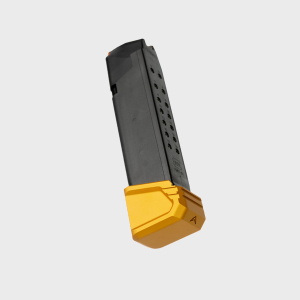
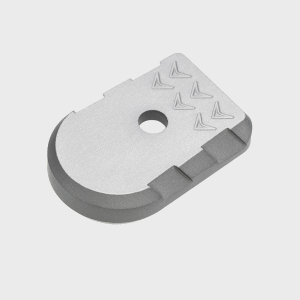
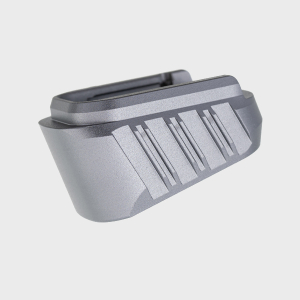
A different grip module can provide a higher undercut, altered trigger reach, interchangeable backstraps, additional texture, a larger beavertail, or a longer firing grip.
For example, an XMacro-style module can provide a substantially larger grip while keeping the platform in a traditional pistol format.
Determine Whether You Need Ergonomics or a New Platform
If your complaint is primarily grip size or texture, start by evaluating grip-module options. If you specifically want the additional architecture and features of a PDW-style chassis, the TWS365 represents a fundamentally different direction.
Magazine Configuration Matters With Both
The magazine system should be considered before choosing either route because grip dimensions and chassis design can influence which magazines make sense for the completed build.
Standard Grip Module Magazine Fit
Different P365 grip configurations are designed around different magazine lengths. A compact module and an XMacro-style module therefore do not necessarily use magazines in exactly the same way.
TWS365 Dual-Magazine Concept
The TWS365 takes magazine management in another direction by providing a forward holder for a spare magazine. The result is a self-contained configuration with one magazine in the firearm and another stored directly on the chassis.
Carry and Storage Are Very Different
This may be the most important practical distinction for buyers who currently use a P365 as an everyday handgun.
Standard Grip Module Setup
A conventional module preserves the P365's traditional pistol footprint. Choosing a compact configuration can emphasize concealment, while a larger module can trade some concealability for additional grip space and capacity.
TWS365 Setup
The TWS365's brace, blast shield, forward magazine holder, and expanded chassis geometry create a substantially different package. Dedicated carry and storage equipment should therefore be considered part of the overall purchase decision.
Don't Assume Your Existing Holster Transfers
A holster designed around a standard P365 grip and slide configuration is not intended to accommodate the expanded TWS365 chassis. The TWS365 has dedicated holster solutions designed around its chassis geometry.
Which Setup Offers More Modularity?
Both approaches are modular, but they provide different kinds of modularity.
Grip Modules Offer Configuration Modularity
Standard and aftermarket grip modules let owners move between different grip lengths, ergonomics, magazine configurations, and accessory rails while retaining a conventional pistol format.
TWS365 Offers System-Level Modularity
The TWS365 adds a larger framework around the P365, including a removable forward magazine holder, blast-shield arrangement, folding brace, and accessory interfaces.
The question is therefore not simply which one is more modular. Buyers should decide what kind of modularity they actually need.
Who Should Stay With a Standard Grip Module?
A standard or aftermarket grip module is generally the more logical direction for someone who likes the P365 as a conventional handgun but wants to refine its ergonomics or configuration.
You Want to Preserve the P365 Format
If compact dimensions and familiar pistol handling are major reasons you chose the P365, changing the grip module allows you to improve the setup without moving away from those characteristics.
You Mainly Want Better Ergonomics
A grip module can address hand fit, texture, beavertail shape, trigger reach, magazine capacity, and rail requirements without adding an entire chassis system.
You Frequently Carry the Pistol Conventionally
For a traditional concealed-carry setup, staying within the normal P365 grip-module ecosystem is generally the simpler route.
Who Should Consider the TWS365?
The TWS365 makes more sense when the buyer specifically wants to move beyond the standard P365 pistol configuration.
You Want a PDW-Style Platform
The folding brace, expanded chassis, accessory interfaces, and forward magazine holder distinguish the TWS365 from a normal replacement grip.
You Want to Retain P365 Modularity
The system remains centered around the P365 FCU and upper architecture, allowing an existing P365 owner to build around components from a familiar platform rather than moving to an unrelated system.
You Value a Self-Contained Configuration
Onboard spare-magazine storage and the folding chassis arrangement create a package intended for buyers who want a different level of system integration than a conventional handgun provides.
Compare Total Setup Requirements Before Buying
The cost of either route extends beyond the grip module or chassis itself. Consider what else the completed configuration will require.
With a Standard Grip Module
You may need compatible magazines, a different holster, a magwell, or accessories that match the new rail configuration. However, much of an existing P365 setup may remain unchanged.
With the TWS365
The chassis itself provides substantially more functionality, but the finished system should be evaluated with its intended optic, magazines, accessories, carry equipment, and storage arrangement.
Comparing the complete build rather than only the initial component price provides a much clearer picture of which direction makes sense.
Did You Know?
The same P365 FCU architecture can support dramatically different configurations—from a compact conventional pistol with an aftermarket grip module to a larger TWS365 PDW-style chassis system—making the intended role of the finished build one of the most important buying considerations.
Conclusion
Choosing between the TWS365 and a standard P365 grip-module setup comes down to how far you want to transform the platform. A conventional grip module is the better fit when the goal is improved ergonomics, different magazine capacity, expanded accessory compatibility, or a larger grip while preserving traditional P365 handling. The TWS365 goes considerably further, adding a hybrid chassis architecture, folding brace, accessory interfaces, open upper configuration, and onboard spare-magazine storage. Before buying, consider your existing FCU and upper, desired accessories, magazines, carry requirements, and the role you want the completed setup to fill. To explore the dedicated chassis platform, visit Tyrant Weapon Systems for SIG Sauer.
FAQs
Is the TWS365 just a replacement P365 grip module?
No. A standard grip module primarily changes the frame and ergonomics while retaining a conventional handgun configuration. The TWS365 is a larger PDW-style chassis system with a folding brace, forward magazine holder, accessory interfaces, and additional structural components.
Why would I choose a standard P365 grip module instead of the TWS365?
A conventional grip module makes more sense if you primarily want better ergonomics, different grip length, magazine capacity, or accessory compatibility while preserving the traditional P365 pistol format.
Can the same P365 FCU be used with different grip configurations?
The modular FCU is one of the defining features of the P365 family and allows it to be used with compatible grip-module configurations. Exact component fitment should always be verified for the intended setup.
Does the TWS365 support different P365 upper configurations?
The TWS365 uses an open upper architecture intended to provide flexibility around different P365 slide, barrel, optic, and muzzle configurations. Buyers should still verify their exact component combination before purchasing.
Which option is better for someone who wants to keep the P365 compact?
A conventional P365 grip module is generally the more appropriate choice when maintaining a traditional compact handgun footprint is the priority. The TWS365 intentionally transforms the P365 into a larger and more specialized chassis-based configuration.